Bhutan Versus Tajikistan Two Flags: A Comparative Look at Symbolism, Design, and National Identity
Flags are far more than pieces of fabric flapping in the wind. They encapsulate history, cultural values, and national aspirations. When you set the flags of Bhutan and Tajikistan side by side, you are essentially comparing two vastly different worlds — one rooted in Himalayan Buddhist tradition, the other shaped by Persian heritage and Soviet influence. The visual contrast between Bhutan versus Tajikistan two flags tells an immediate story of geography, religion, and political evolution. But beyond the surface, each element, color, and shape carries layers of meaning worth unpacking.
The Visual First Impression: Colors and Composition
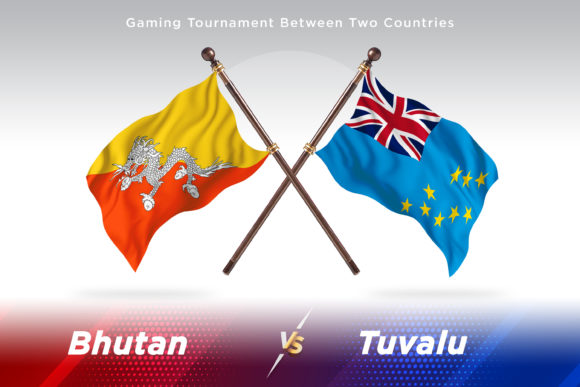
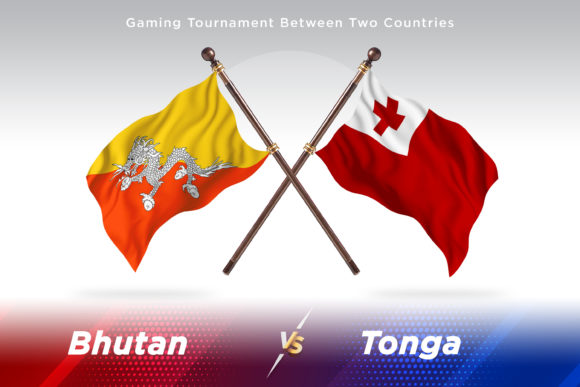
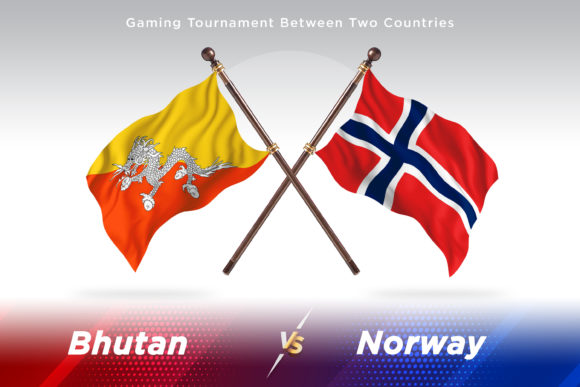
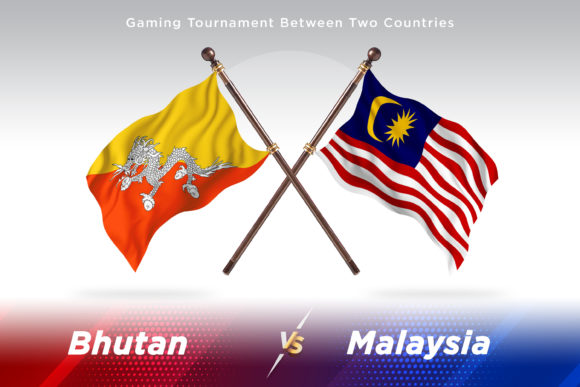
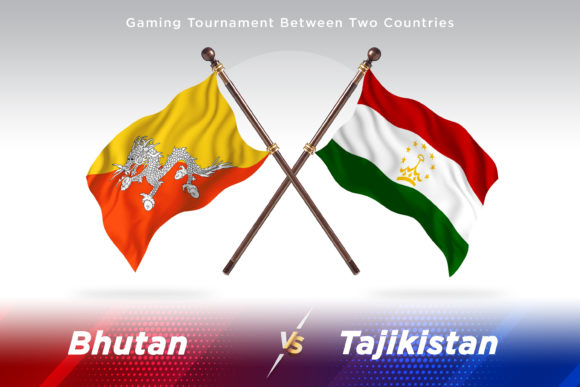
At a glance, the flag of Bhutan is dominated by a striking diagonal split. The upper left half is a golden yellow, while the lower right half is a deep orange. In the center, a white dragon known as the Druk roars with clenched paws holding jewels. The design feels ancient, almost mythical, and it is intentionally so.
Tajikistan’s flag, on the other hand, follows a horizontal tricolor pattern: a wide central white stripe flanked by red on top and green on the bottom. Above the white band sits a golden crown rimmed with a semicircle of seven stars. The layout is clean, symmetrical, and reminiscent of other post-Soviet flags in Central Asia, yet it retains a distinct Persian character through the crown motif.
When considering Bhutan versus Tajikistan two flags purely on visual grounds, the differences are immediate. Bhutan’s flag is asymmetrical, diagonally divided, and animated by a central creature. Tajikistan’s is static, horizontally balanced, and relies on geometric symbolism. One is designed to convey motion and spiritual energy; the other conveys order, independence, and national unity.
Decoding the Dragon: Bhutan’s Symbolic Heavyweight
The white dragon on Bhutan’s flag is not decorative — it is the very namesake of the country. Bhutan calls itself Druk Yul, or "Land of the Thunder Dragon." The Druk represents the thunder that roars through the Himalayan valleys, a natural force that is both feared and revered. In Buddhist iconography, the dragon also symbolizes power, protection, and the male principle.
Look closely, and you will notice the dragon is clutching four jewels in its claws. These jewels represent the wealth and security of the nation, both material and spiritual. The dragon's snarling mouth suggests vigilance — Bhutan is small, but it is fierce in preserving its sovereignty and culture. The white color of the dragon denotes purity and loyalty across ethnic groups within the kingdom.
The yellow field in the upper portion signifies the secular authority of the King, while the orange field represents the Buddhist spiritual tradition. Together, they reflect the dyarchy that has historically defined Bhutan: the dual governance of temporal and religious power. This is a flag that demands interpretation. You cannot look at Bhutan versus Tajikistan two flags without recognizing that Bhutan’s design is deeply narrative rather than purely ornamental.
Tajikistan’s Crown and Mountains: A Story of Revival
Tajikistan’s flag was adopted in 1992, shortly after the collapse of the Soviet Union. The red stripe at the top recalls the country’s revolutionary past and also symbolizes the unity of the nation. The green stripe at the bottom represents the agricultural heartland and the valleys that sustain life. But the centerpiece — literally and figuratively — is the white band, which stands for cotton, snow-capped peaks, and the purity of the Tajik people.
The golden crown in the middle of the white stripe is perhaps the most loaded symbol. It references the Tajik word taj, meaning "crown," from which the country’s name is believed to derive. The crown is not a royalist symbol in the European sense. Instead, it evokes the ancient Persian legacy of the Samanid Empire and the cultural continuity of the Tajik people. Above the crown, seven stars form a semicircle. In Tajik cosmology, the number seven is sacred and appears in myths about the heavens, the mountains, and the seven regions of the world.
Unlike Bhutan’s dragon, which is overt and aggressive in its symbolism, Tajikistan’s symbols are more subdued and intellectual. You need to understand Persianate history and Soviet heraldic conventions to fully grasp why the crown and stars sit where they do. In comparing Bhutan versus Tajikistan two flags, you see two approaches to national branding: one that yells its identity through a mythical beast, and another that whispers it through geometry and remembered empire.
Practical Dimensions: How the Flags Are Used in Daily Life
Flags matter not only as symbols but as everyday objects. In Bhutan, the flag is ubiquitous during religious festivals, royal ceremonies, and national holidays. You will see it on dzongs (fortress monasteries), government buildings, and even on backpacks and souvenirs. The dragon motif is so central that it appears on currency, stamps, and official documents. When Bhutanese citizens talk about their flag, they refer to it with a sense of sacredness — it is not uncommon to see flags treated with ritual care during hoisting ceremonies.
In Tajikistan, the flag flies over government institutions, schools, and public squares. It is especially prominent during Independence Day celebrations on September 9, when Dushanbe’s streets fill with red, white, and green banners. The flag is also used in sporting events, where Tajikistani athletes drape themselves in it after victories. However, the symbol of the crown has sometimes been a point of political debate — does it represent a return to Persian roots, or does it risk alienating the country’s ethnic minorities? That tension is part what makes the flag fascinating.
For designers, educators, or travelers who find themselves comparing Bhutan versus Tajikistan two flags, the practical takeaway is about appropriateness. If you are creating educational materials or travel content, the Bhutan flag offers immediate recognition value because of the dragon. The Tajik flag requires more context — its meaning is less obvious to an untrained eye.
Cultural Resonance: What Each Flag Says About National Personality
Bhutan’s flag suggests a nation that has deliberately chosen to remain outside the mainstream of globalization. It is a flag that does not try to be modern in a Western sense. It embraces mythology, religion, and a kind of proud isolation. When you see the Druk, you think of monasteries perched on cliffs, of prayer flags fluttering in mountain passes, of a Gross National Happiness index that prioritizes well-being over GDP. The flag is an extension of that philosophy.
Tajikistan’s flag, by contrast, tells a story of reconstruction. After decades under Soviet rule, where religious and cultural symbols were suppressed, the flag represents a reclamation of identity. The crown is an assertion that Tajikistan is part of the Persian-speaking world, separate from its Turkic neighbors. The green stripe speaks to an agrarian past that remains central to the economy. The red stripe acknowledges a revolutionary history that cannot be erased.
When you examine Bhutan versus Tajikistan two flags through this lens, you are really examining two models of nation-building. Bhutan is continuity — it has never been colonized and only reluctantly opened to the outside world. Tajikistan is reinvention — forged from the wreckage of the USSR and still negotiating what it means to be a modern Persianate state in Central Asia.
Common Misconceptions and Observations
One frequent misconception is that Bhutan’s flag looks similar to the flag of the Kingdom of Sikkim (which existed before its merger with India), due to the diagonal split and central emblem. But Bhutan’s dragon is unique in its posture and number of claws — the Druk traditionally has four claws, while Chinese dragons have five. These details matter to flag enthusiasts and vexillologists.
Another common observation is that Tajikistan’s flag resembles the flags of Iran and Afghanistan, because all three feature a central emblem on a tricolor background. While the similarity is superficial, it reflects a shared Persian cultural heritage. However, the crown and stars are specifically Tajik — no other national flag uses an identical combination. This is something to note when analyzing Bhutan versus Tajikistan two flags in a global context: both countries have managed to create symbols that are unmistakably their own, even if they draw from broader cultural traditions.
Flag Protocols and Etiquette Worth Knowing
Both countries take their flags seriously, but the protocols differ. In Bhutan, the flag must never touch the ground, and it is traditionally hoisted at sunrise and lowered at sunset, though in practice, many government buildings fly it 24 hours a day. The flag is also prominently displayed during the annual tsechu festivals, where it is carried in procession alongside religious icons.
In Tajikistan, flag etiquette follows standard post-Soviet regulations. The flag should be displayed vertically or horizontally, but never in a way that the crown appears upside down or sideways. During periods of national mourning, the flag is flown at half-staff. Interestingly, the flag was modified slightly in the early 1990s to finalize the shade of green and the exact positioning of the stars — a reminder that even young nations refine their symbols over time.
For travelers, businesspeople, or content creators, understanding these protocols is essential when producing respectful material that involves Bhutan versus Tajikistan two flags. Misusing a national symbol can have real diplomatic or social consequences, especially in countries where the flag is deeply tied to religious or political identity.
Why the Comparison Matters Beyond Vexillology
Comparing the flags of Bhutan and Tajikistan is not an idle exercise. It reveals how two landlocked, mountainous countries with distinct cultural lineages use design to assert their place in the world. Bhutan uses a flag that feels timeless, as if it has always existed. Tajikistan uses a flag that is deliberate, calculated, and carefully assembled from historical fragments. One looks backward with pride; the other looks forward with intention.
For students of design, political science, or cultural studies, Bhutan versus Tajikistan two flags offers a compact case study in how national identity is encoded in color, shape, and symbol. There is no right or wrong flag — only flags that succeed or fail in communicating the values of the people they represent. Both of these flags succeed, but in entirely different languages.
Whether you are a flag collector, a traveler planning a trip to the Himalayas or the Pamirs, or simply someone curious about how nations tell their stories, taking time to understand the details in both flags enriches your appreciation of what flags can do. They are not just markers of territory. They are mirrors of the soul.