Bosnia Versus Papua New Guinea Two Flags
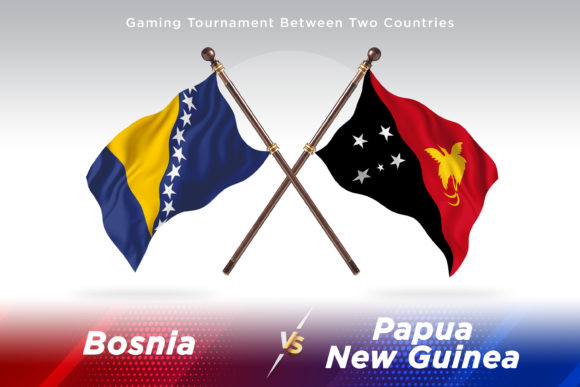
Flags tell stories. They compress history, identity, and values into a single visual symbol. When you place the flag of Bosnia and Herzegovina next to the flag of Papua New Guinea, the contrast is immediate—and so is the curiosity. One features a blue field with a yellow triangle and white stars. The other displays a striking red and black diagonal split with a golden bird of paradise and the Southern Cross. These two designs come from vastly different parts of the world, yet comparing them side by side reveals something deeper about how nations choose to represent themselves. Whether you are researching flags for a school project, designing a travel blog, or simply satisfying your own curiosity, understanding the differences and similarities between these two flags is a rewarding exercise in visual literacy and cultural awareness.
What Makes Each Flag Distinct
The flag of Bosnia and Herzegovina was adopted in 1998, following the Dayton Peace Agreement that ended the Bosnian War. It features a wide blue vertical band on the right side, a golden-yellow triangle that cuts into the blue from the top, and a line of seven full white stars and two half-stars that curve along the edge of the triangle. The blue and yellow echo the colours of the European Union, signalling a European future. The triangle represents the three constituent peoples of Bosnia—Bosniaks, Serbs, and Croats—as well as the country's rough geographic shape. The stars are infinite in number, meant to symbolise continuity and unity.
Papua New Guinea's flag was designed by a 15-year-old schoolgirl named Susan Karike and formally adopted in 1971, four years before independence. It is divided diagonally from the top hoist to the bottom fly: the lower left triangle is black, and the upper right triangle is red. In the black section, five white five-pointed stars form the Southern Cross constellation, a navigational guide and a symbol of the country's place in the southern hemisphere. In the red section, a yellow bird of paradise soars—this is the national bird of Papua New Guinea and a symbol of cultural freedom and natural beauty. Red and black are traditional colours in Papuan art and ceremonial dress.
At first glance, these two flags could hardly look more different. One is geometric and modern, the other is bold and nature-inspired. But both achieve the same purpose: they mark a distinct national identity in a way that residents recognise and outsiders remember.
Why Someone Would Compare These Two Flags
You might not expect a casual comparison between a southeastern European country and an island nation in Oceania. But there are several practical and creative reasons someone may want to examine Bosnia versus Papua New Guinea two flags side by side.
- Educational research: Students of geography, political science, or vexillology often compare flags from different regions to understand how climate, history, and culture shape national symbols.
- Design inspiration: Graphic designers and content creators sometimes look at unrelated flag pairs to explore contrasting approaches: one minimalist and abstract, the other expressive and representational.
- Travel and cultural planning: Travelers or bloggers preparing content about multiple destinations may need to visually distinguish these countries and their symbols in presentations or infographics.
- Trivia and curiosity: Many people simply enjoy the visual puzzle of seeing two unfamiliar flags together and learning the stories behind them.
The comparison is also useful for understanding how different nations handle a similar design challenge: representing unity in diversity. Bosnia's flag acknowledges three ethnic groups through a triangle and infinite stars. Papua New Guinea's flag honours over 800 languages and tribal traditions through a single bird and a constellation. Both flags contain rich symbolism, but they take opposite paths to express it.
Practical Ways to Use This Comparison
Understanding Bosnia versus Papua New Guinea two flags goes beyond trivia. It has real applications in several domains.
In Education and Teaching
If you are an educator or a student preparing a presentation on world flags, pairing these two helps illustrate the difference between European heraldic traditions and Oceanic visual culture. You could create a simple comparison table that lists symbolism, colour meaning, adoption date, and designer background. Students can discuss why Bosnia chose EU-associated colours despite not being a member of the Union, or why Papua New Guinea included a bird that few outside the region have seen in person. These discussions build critical thinking about symbolism and national identity.
In Creative and Design Work
For designers, these two flags present an excellent case study in colour theory and composition. Bosnia's flag uses a cool blue with warm yellow accents, creating a calm but forward-looking tone. Papua New Guinea's flag uses a high-contrast red and black combination that feels earthy and energetic. If you are working on a project that requires representing two contrasting themes—such as tradition versus modernity, or nature versus structure—you might draw inspiration from the colour palettes or compositional balance of these flags. A presentation slide deck about global contrasts could use these two flags as visual anchors.
In Travel and Lifestyle Content
Bloggers and travel content creators often feature flag imagery when covering destinations. If you are writing about Bosnia and Herzegovina and Papua New Guinea as part of a series on underrated travel destinations, including a comparison of their flags adds a thoughtful layer. Readers gain an immediate visual hook that also carries cultural context. You might note that Bosnia's flag points toward European integration, while Papua New Guinea's flag celebrates independence and natural heritage. This kind of detail enriches travel writing beyond typical sightseeing lists.
In Business and Professional Contexts
Entrepreneurs and small business owners involved in international trade, import-export, or cultural consulting may encounter these flags in logistics, marketing, or branding materials. Knowing the correct arrangement, colours, and symbolism of each flag helps avoid unintentional disrespect or misinterpretation. For example, displaying the Papua New Guinea flag upside down would reverse the black and red triangles, which changes the meaning and could offend local partners. Similarly, using the wrong shade of blue for the Bosnian flag might undermine the professionalism of a proposal. A simple visual reference of Bosnia versus Papua New Guinea two flags side by side can serve as a quick accuracy check.
Important Considerations Before Using Flag Imagery
Flags are not just decorative elements. They carry legal and emotional weight. Before you use either flag in a commercial project, educational handout, or public display, keep the following points in mind.
- Respect the design rules: Both flags have specific proportions, colour codes, and orientations that should be followed accurately. For the Bosnian flag, the triangle must point downward and the stars must follow the curved line precisely. For the Papua New Guinea flag, the Southern Cross must be positioned correctly within the black triangle, and the bird of paradise must face the hoist.
- Avoid alteration: Do not crop, distort, or add text overlays to either flag unless you have clear permission or a specific cultural rationale. Many countries have laws protecting the national flag from commercial misuse.
- Understand cultural significance: The bird of paradise on Papua New Guinea's flag is not just a decorative element—it is a deeply respected symbol of the nation's natural wealth and cultural identity. The triangle and stars on Bosnia's flag represent a hard-won peace and ethnic coexistence. Using these symbols lightly or without context can be perceived as insensitive.
- Check licensing for commercial use: Government-produced flag images are often in the public domain, but vector files or stylised versions created by third parties may carry usage restrictions. Always verify the source before including flag imagery in a product, publication, or website.
What Beginners Should Focus On First
If you are new to flag study or world geography, the comparison between Bosnia and Papua New Guinea offers a manageable entry point. You do not need to memorise every detail. Start by noticing the big structural choices: Bosnia uses a vertical layout with a prominent geometric shape, while Papua New Guinea uses a diagonal split with representative figures. Ask yourself which one feels more familiar and which one challenges your expectations. Then look closer at the small details—the half-stars on Bosnia's flag, the exact number of stars in the Southern Cross, the posture of the bird. These fine points are what make each flag unique and what connect them to deeper national stories.
A good next step is to find high-quality images of both flags side by side and study them without labels. See if you can recall the symbolism for each element. Then try explaining the differences to someone else—this is one of the most effective ways to cement your understanding. If you are a blogger or educator, you might even create a short visual guide or infographic that walks readers through the comparison step by step. The exercise sharpens observation skills and builds cross-cultural awareness, two abilities that are valuable in nearly any personal or professional context.
The flags of Bosnia and Herzegovina and Papua New Guinea are separated by thousands of kilometres and centuries of history. But placed side by side, they become a conversation about how humans use colour, shape, and symbol to say who we are, where we come from, and what we value. Whether you are comparing them for a classroom, a design project, or your own curiosity, the exercise is well worth your time.