Brazil vs Croatia: Two Flags Compared
Flags are more than pieces of fabric. They carry identity, history, and meaning. When you look at the national flags of Brazil and Croatia side by side, you see two designs that are instantly recognizable, yet vastly different in style, symbolism, and purpose. Whether you are a traveler, a designer, a student, or a business owner, understanding what makes these flags distinct can help you appreciate their stories and use them more meaningfully in your own context.
What Are the Brazil and Croatia Flags?
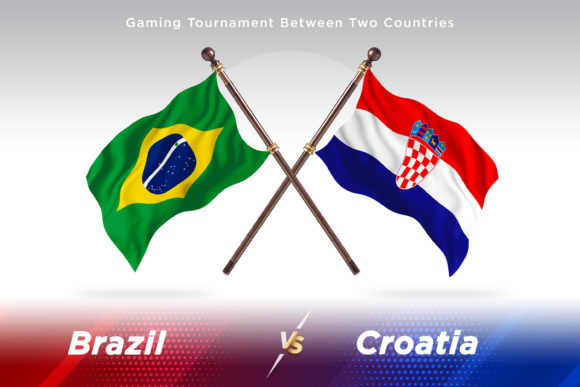
The flag of Brazil features a green field with a large yellow diamond at the center. Inside the diamond is a blue globe filled with white stars and a white band marked with the national motto “Ordem e Progresso” (Order and Progress). The green represents the forests, the yellow stands for the country’s mineral wealth, and the blue globe depicts the night sky over Rio de Janeiro on November 15, 1889 — the date the republic was proclaimed.
Croatia’s flag is tricolor with three equal horizontal stripes of red, white, and blue. At the center is the coat of arms, a red and white checkerboard shield topped with a crown of five smaller shields that represent the country’s historical regions. The red, white, and blue are Pan-Slavic colors, and the checkerboard has been a symbol of Croatia for centuries.
Comparing these two flags means exploring how different cultures express pride, history, and values through color, shape, and symbol. It is a study in contrast: one lush and circular, the other geometric and striped.
Why Different People Care About These Flags
At first glance, comparing flags might seem like a niche interest. But in reality, many types of people encounter these national symbols regularly and for different reasons.
Travelers and Culture Enthusiasts
If you are planning a trip to South America or the Balkans, knowing what each flag looks like and what it represents can deepen your experience. A traveler visiting Brazil might seek out the flag in parades, stadiums, or on government buildings. Understanding the stars and the motto adds context to the culture. Similarly, a visitor to Croatia may want to recognize the checkers on souvenirs, jerseys, and official emblems. For you, the practical use of flag knowledge is about respect and awareness — knowing that the Croatian coat of arms has particular regional shields helps you appreciate local identities.
Designers and Creators
For graphic designers, artists, or content creators, the Brazil-versus-Croatia flag comparison is a case study in contrast. The Brazilian flag uses vibrant green and yellow, a diamond shape, and a complex star map — all of which require careful scaling and simplification when used in logos, infographics, or web elements. The Croatian flag, while simpler in layout, demands precision with the checkerboard pattern and the small shields in the crown. If you are designing international materials, understanding the proportional differences matters: Brazil’s flag is 7:10 ratio, Croatia’s is 1:2. A creator might choose one color palette or layout style based on which flag feels more adaptable to a brand identity project.
Educators and Students
Teachers often use flags to introduce geography, history, and civics. A lesson on Brazil versus Croatia flags can illustrate how national symbols evolve. For a student, memorizing the differences helps in exams, but the deeper benefit is learning how a former Portuguese colony (Brazil) and a European nation with a complex past (Croatia) each condensed their stories into a simple design. When you teach this topic, you can ask students to compare the use of scripture (the motto in Brazil) versus heraldry (the coat of arms in Croatia). That kind of comparative analysis sharpens critical thinking.
Business Owners and Entrepreneurs
If you run a business that deals with international partners, importing or exporting, or marketing to diaspora communities, flag accuracy can build trust. A small business selling Brazilian products may use the green-and-yellow scheme in packaging, but must be careful not to distort the flag legally or visually. A Croatian restaurant owner might decorate with the tricolor and checkerboard, but using an incorrect version of the coat of arms could offend customers. For entrepreneurs, knowing the official specifications of both flags (like the exact shade of green or the number of checks in the shield) is a matter of quality control and respect.
Different Priorities When Evaluating These Flags
People judge flags by different criteria depending on their goals. Let’s break down common priorities and see how Brazil’s and Croatia’s flags stack up.
Ease of Recognition
If you need a flag that is instantly identifiable from a distance — for instance, at a sports event or in a crowded parade — both flags perform well, but in different ways. Brazil’s bright green and yellow stand out vividly, and the diamond shape is unique among national flags. Croatia’s red-white-blue tricolor is common (many Slavic countries use it), but the checkerboard shield makes it distinct. For a fan attending a World Cup match, the Croatian flag’s checkerboard is a strong visual cue. For a broadcaster or event organizer, Brazil’s flag avoids confusion with other green-and-yellow flags (only Bolivia and Guyana use green-yellow combinations, but their designs differ).
Symbolic Depth
For those who value meaning over pure aesthetics, the Brazil flag offers rich, layered symbolism tied to astronomy, positivist philosophy, and historical events. Every star corresponds to a state, and the sky configuration is scientifically accurate. Croatia’s flag conveys medieval heritage, regional unity, and Slavic solidarity. An educator or historian might argue that Croatia’s flag tells a more complex political story — the shield within the crown acknowledges distinct regions, reflecting a built‑in respect for diversity. A philosopher might appreciate Brazil’s motto as a statement of national ideals.
Practical Use in Design
For a creator or marketer, the flexibility of each flag matters. Brazil’s diamond and circular elements work well as a central badge but can be difficult to crop or use in horizontal banners. Croatia’s stripes are easy to integrate into borders, headers, and linear layouts. If you are designing a social media profile picture for a joint project between Brazilian and Croatian teams, you need to find a visual balance — perhaps using the colors without the full flags, or placing the flags side by side with careful whitespace. A beginner designer might start by copying the layout of one flag to learn color harmony; an experienced designer will analyze how the green-yellow complement of Brazil contrasts with the red-white-blue triad of Croatia.
Long‑Term Usefulness and Memorability
For someone looking to use the flag in a long‑term brand or educational resource, both flags have proven staying power. Brazil’s flag has been largely unchanged since 1889 (only the number of stars updated). Croatia’s flag was adopted in 1990 but its shield design dates back centuries. If you are a publisher creating a world flag encyclopedia, each flag offers stable material that won’t confuse readers with frequent revisions. A business owner might consider that Brazilian flag imagery is extremely common in global culture, while Croatian flag imagery is more niche — which could be an advantage if you want to stand out or a disadvantage if you need broad recognition.
Practical Examples for Different Reader Types
Let’s imagine specific scenarios to illustrate how the Brazil versus Croatia flag comparison applies.
Scenario for a blogger: You write a travel post titled “Two Flags, Two Worlds.” You compare the green of the Amazon rainforest with the shoulder‑strap width of Croatia’s checkerboard. For readability, you embed side‑by‑side images and highlight that Brazil’s flag has a scientific star map while Croatia’s uses a medieval shield. Your audience of travel hobbyists gets both geography and history in a visual way.
Scenario for a small business owner: You source handmade goods from both countries. In your online store, you display the flags next to product descriptions to show authenticity. However, a customer points out that your Croatian flag shows the wrong number of red and white squares in the shield (13 red and 12 white is correct — the first square in the top left is red). You correct it immediately. For you, precision is a trust issue.
Scenario for an educator: In a comparative government class, you use the flags to discuss how symbols reflect political systems. Brazil’s flag emphasizes progress and order, reflecting its republican and positivist roots. Croatia’s flag emphasizes historical continuity through the crown of regional shields, reflecting a more federal or regional tradition. Students walk away understanding that a flag is a microcosm of governance philosophy.
Scenario for a hobbyist vexillologist: You love flags for their own sake. You create a chart rating flag designs according to the “Good Flag, Bad Flag” principles. Brazil scores high on meaningful symbolism and simplicity in colors but lower on using two different shapes (diamond inside rectangle) — some purists prefer simpler geometry. Croatia scores well on distinctive identity but uses a coat of arms that can be complex at small sizes. Your hobby becomes a learning tool for others.
How to Decide If This Comparison Matters to You
Ask yourself a few questions. Are you preparing content for an audience that engages with national identity? Then understanding the nuances of Brazil vs Croatia flags will improve your credibility. Are you buying merchandise or decor with flag designs? Check the official regulations to avoid misrepresentation. Are you learning about flag design principles? Use these two as contrasting case studies — one organic and starry, one structured and heraldic.
The comparison is most valuable when you have a specific use in mind. A traveler cares about recognition and etiquette. A designer cares about proportions and color accuracy. A teacher cares about symbolism and historical context. A business owner cares about legal and cultural sensitivity. Identify your role, and you will immediately know which aspects of the two flags to focus on.
Ultimately, both flags are masterpieces of visual storytelling. Brazil’s tells a story of natural wealth, celestial order, and national optimism. Croatia’s tells a story of resilience, regional unity, and deep‑rooted heritage. When you set them side by side, you are not just looking at cloth — you are comparing two worlds, and that is exactly what makes the topic worth exploring.