Bosnia Versus Kuwait Two Flags: Design, Symbolism, and Cultural Meaning
Flags are far more than decorative cloth. They condense centuries of history, national identity, and shared values into a few bold shapes and colors. When comparing the flags of Bosnia and Herzegovina and Kuwait, you are looking at two designs that serve similar functions yet communicate very different stories. Understanding what makes each flag distinct helps not only in recognizing them correctly but in appreciating the cultural and historical contexts they represent.
What Makes the Flag of Bosnia and Herzegovina Distinct
The national flag of Bosnia and Herzegovina was adopted in 1998, following the Dayton Peace Agreement that ended the Bosnian War. Its design deliberately moves away from the ethnic and religious symbols that had divided the country, aiming instead for a unifying visual identity.
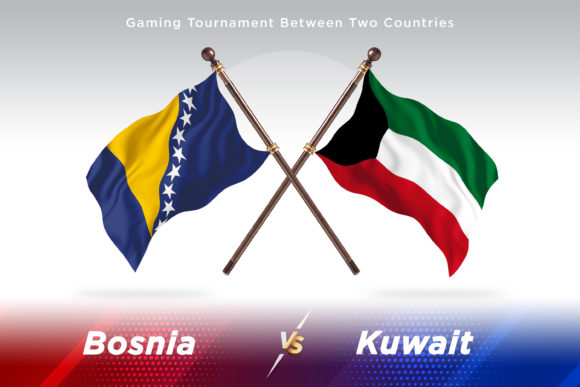
The flag features a wide blue vertical band on the right side, a yellow triangle on the left, and a line of seven full white five-pointed stars and two half stars running diagonally along the hypotenuse of the triangle. Blue, yellow, and white are colors associated with peace and neutrality. The triangle represents the three constituent peoples of Bosnia and Herzegovina — Bosniaks, Serbs, and Croats — as well as the approximate shape of the country. The stars, often compared to those on the European Union flag, symbolize Europe and the country’s aspirations for integration.
Key Design Elements of the Bosnia Flag
- Background: Deep blue, conveying stability and openness
- Triangle: Yellow, representing equality and the three major ethnic groups
- Stars: White, infinite in number conceptually (though seven full stars are shown), signaling continuity and a European orientation
- Layout: Asymmetrical, with the triangle extending from the top edge to the bottom, creating a dynamic diagonal division
The Bosnia flag is relatively young compared to many national flags. Its modern aesthetic was intentionally designed to break with older, more divisive symbols. This makes it a case study in how vexillography — the art of flag design — can be used to project a forward-looking national image.
What Makes the Flag of Kuwait Distinct
Kuwait’s flag, adopted in 1961 upon independence from Britain, follows a classic Arab flag tradition but adds its own distinctive geometry. It consists of three horizontal stripes of green, white, and red, with a black trapezoid on the left side nearest the hoist.
These colors are not arbitrary. They are drawn from the pan-Arab colors that have been used in various Arab national movements since the early twentieth century. Each color carries traditional meaning: green represents the land and fertility, white symbolizes purity and peace, red recalls the blood of struggle for independence, and black stands for the defeat of enemies on the battlefield.
Key Design Elements of the Kuwait Flag
- Stripes: Three equal horizontal bands of green (top), white (middle), and red (bottom)
- Trapezoid: Black, placed at the hoist side, spanning the full height of the flag
- Proportions: Standard 1:2 ratio, typical for many national flags
- Layout: Symmetrical in the horizontal sense, with the trapezoid creating a distinctive break from the simple tricolor pattern
The Kuwait flag is immediately recognizable within the Gulf region and among Arab nations. Its design is both traditional and distinct — the black trapezoid sets it apart from similar flags such as those of the United Arab Emirates or Palestine, which use a vertical stripe or triangle instead.
Comparing the Two Flags: Visual and Symbolic Differences
When you place Bosnia versus Kuwait two flags side by side, the first thing you notice is the difference in complexity. The Bosnia flag uses a diagonal, asymmetrical layout with multiple stars, while the Kuwait flag relies on a straightforward horizontal stripe pattern with one geometric element at the hoist.
This visual difference reflects deeper contrasts in national narrative. The Bosnia flag was designed to solve a problem — how to represent a multi-ethnic country recovering from conflict — while the Kuwait flag was designed to assert independence and join a broader Arab identity. One looks toward Europe and integration; the other looks toward regional solidarity and historical continuity.
Color Symbolism: Shared Meanings, Different Emphases
Both flags use blue (Bosnia) and green (Kuwait) as dominant colors, but these convey very different messages. Blue in the Bosnia context suggests openness, peace, and a European orientation. Green in the Kuwait context evokes Islam, fertility, and the Arabian landscape. White appears in both flags, but in Kuwait it is a central stripe standing for purity, while in Bosnia it is limited to the stars, playing a supporting role. Red appears only in the Kuwait flag, directly referencing sacrifice and struggle — an element entirely absent from the Bosnia design.
Geometric Structure: Asymmetry Versus Symmetry
The Bosnia flag is deliberately asymmetrical. The yellow triangle cuts diagonally across the field, creating a sense of motion and tension. This asymmetry mirrors the complex, non-linear nature of Bosnia’s political and social landscape. In contrast, the Kuwait flag is geometrically balanced. The horizontal stripes provide stability, while the black trapezoid offers a grounding anchor on the left side. This symmetry conveys order, tradition, and clarity — values that resonate with Kuwait’s relatively stable post-independence history.
Strengths and Tradeoffs of Each Design
Each flag carries strengths that suit its purpose, but neither is without tradeoffs. Understanding these can help you evaluate which design communicates more effectively in a given context.
Strengths of the Bosnia Flag
- Memorability: The diagonal triangle and star arrangement are visually distinctive and easy to recall once learned
- Neutrality: By avoiding ethnic or religious symbols, the flag can represent all citizens equally
- Modern appeal: The design looks contemporary, fitting for a country that wants to project a European future
Tradeoffs of the Bosnia Flag
- Complexity: The stars and diagonal layout can be harder to reproduce accurately, especially at small sizes or on low-resolution media
- Lower recognition: Compared to older, more famous flags, the Bosnia flag is less familiar to many people outside the region
- Design density: The combination of multiple elements can feel busy next to simpler flags like Kuwait’s
Strengths of the Kuwait Flag
- Simplicity: Three horizontal stripes and one geometric element make the flag easy to recognize and reproduce
- Cultural resonance: The pan-Arab colors immediately place Kuwait within a larger regional identity, fostering solidarity
- Historical grounding: The flag connects directly to the independence movement and traditional symbolism
Tradeoffs of the Kuwait Flag
- Similarity to other flags: Without the black trapezoid, the Kuwait flag could easily be confused with Jordan, Palestine, or the UAE flags at a distance
- Limited distinctiveness: Within the Gulf region, the flag shares a color palette and basic structure with several neighbors, making it less unique
- Traditional constraints: The design follows an established pattern, which may feel less innovative or forward-looking compared to the Bosnia flag
When Each Flag May Be the Right Choice for Your Topic or Project
If you are working on a project that involves flag comparison, design analysis, or cultural education, the choice between focusing on the Bosnia flag versus the Kuwait flag depends on your goals.
Choose the Bosnia flag as a case study if you are exploring modern flag design, post-conflict national identity, or European integration symbols. Its recent origin and deliberate departure from ethnic symbolism make it an excellent example of how flags can be used to build a new national narrative. It also works well in discussions about vexillography best practices, since it follows some of the principles of good flag design — simplicity, meaningful symbolism, and distinctiveness — while also testing the limits of those principles with its star layout.
Choose the Kuwait flag as a case study if you are examining pan-Arab identity, Gulf region history, or the relationship between flag design and cultural tradition. Its straightforward geometry and rich color symbolism offer a clear entry point for understanding how flags reflect regional values. It also serves as a useful comparison point for other Arab tricolor flags, allowing you to highlight how small design changes — such as the shape of the black element — can create distinct national identities within a shared visual language.
Realistic Examples and Practical Comparisons
Imagine you are designing an educational display about world flags. Placing Bosnia versus Kuwait two flags side by side allows you to teach several lessons at once. You can point out how both flags use three colors, but one arranges them vertically (in effect, through the triangle and background) while the other uses horizontal stripes. You can discuss how the stars on the Bosnia flag echo the EU flag, while the colors of the Kuwait flag echo those of other Arab nations. These contrasts help learners understand that flags are part of larger visual and political families.
In a graphic design context, the two flags offer different lessons in proportion and scalability. The Kuwait flag scales down cleanly — the stripes and trapezoid remain recognizable even at small sizes. The Bosnia flag, with its small stars and diagonal triangle, requires more care in reproduction. On a tiny lapel pin or a low-resolution screen, the stars may blur together, reducing recognizability. This practical difference matters for anyone using flags in branding, merchandise, or digital media.
Decision Factors for Researchers and Designers
- Context matters: If your audience is European or globally oriented, the Bosnia flag may resonate more strongly. If your audience is Middle Eastern or interested in Arab culture, the Kuwait flag carries immediate regional meaning.
- Recognition goals: For quick identification, the Kuwait flag is easier to parse at a glance. For deeper storytelling, the Bosnia flag provides more layers of meaning to unpack.
- Reproduction constraints: If your medium is small or low-resolution, the Kuwait flag is more forgiving. If you have ample space and resolution, the Bosnia flag’s details can be appreciated.
When You May Need a Different Option Altogether
Of course, not every project calls for comparing these two specific flags. If your focus is on European symbolism more broadly, flags like those of Slovenia, Slovakia, or Lithuania may offer closer parallels to the Bosnia design. If your interest is in Gulf Arab flags, those of Qatar, Bahrain, or Oman provide distinct shapes and colors that contrast with the Kuwait flag in different ways.
The comparison of Bosnia versus Kuwait two flags works best when you want to highlight the contrast between a modern, intentionally neutral design and a traditional, regionally embedded one. If your goal is to show how flags can vary within a single region or how they can solve similar problems in different ways, this pairing offers a rich and balanced example. But if you need to compare flags that share more visual DNA — two European tricolors, for instance, or two Arab flags — then other pairings would serve you better.
Making an Informed Decision
Whether you are a researcher, teacher, designer, or simply curious about national symbols, looking at Bosnia versus Kuwait two flags gives you a practical lens for thinking about how flags work. The Bosnia flag challenges you to consider how a country can design its way out of conflict. The Kuwait flag reminds you how tradition and regional identity can anchor a nation’s visual presence. Both flags are effective, but they are effective in different ways and for different reasons.
When you evaluate any flag, ask yourself what story it is telling. Who is the intended audience? What values does the design prioritize? How does it relate to its neighbors? The comparison between these two flags shows that there is no single right way to design a national symbol — only the way that best fits the nation it represents.