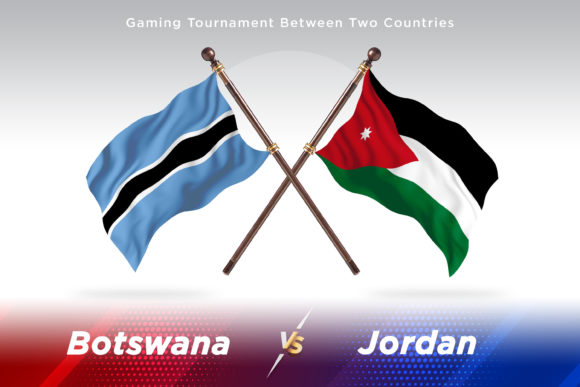
Botswana Versus Jordan: Two Flags, Distinct Meanings
Flags are more than national symbols; they are compact narratives of identity, history, and values. Comparing the flags of Botswana and Jordan offers a practical study in how design choices reflect different cultural and political landscapes. For professionals in design, education, travel, or marketing, understanding these distinctions can inform better visual communication and cultural awareness. This article evaluates the Botswana and Jordan flags side by side, focusing on their characteristics, strengths, practical applications, and what they reveal about the nations they represent.
Design and Symbolism: What Each Flag Represents
The flag of Botswana features a light blue field with a horizontal black stripe bordered by two white stripes centered vertically. Adopted in 1966 after independence, its colors are deeply symbolic. The blue represents water, specifically rain, a precious resource in a semi-arid country. The black and white stripes evoke racial harmony and the zebra, a national animal. This design is clean, modern, and instantly memorable. There is no reliance on complex iconography; instead, it uses simple geometry to convey unity and reliance on nature.
In contrast, the flag of Jordan, adopted in 1928, uses horizontal black, white, and green stripes based on the Pan-Arab colors symbolizing the Abbasid, Umayyad, and Fatimid caliphates. On the hoist side is a red triangle representing the Hashemite dynasty and the Arab Revolt, with a white seven-pointed star at its center. The star’s points stand for the seven verses of the Al-Fatiha (the opening chapter of the Quran) and also symbolize unity of the Arab people. This flag carries layered historical and religious meaning, making it richer in narrative but denser in visual elements.
For someone comparing these flags, the key takeaway is the contrast in simplicity versus complexity. Botswana’s flag communicates through broad, bold shapes and a restricted palette, while Jordan’s flag uses multiple colors, geometric sections, and a specific icon. Both are effective, but they serve different communicative strategies—one immediate and intuitive, the other requiring cultural context to fully appreciate.
Visual Impact and Usability in Design Contexts
When evaluating flags for real-world use—whether for a website banner, an educational poster, or a branding project—visual clarity and reproduction reliability matter. Botswana’s flag performs well in small sizes and on digital screens because its high-contrast stripes remain legible. The blue, black, and white combination is straightforward to reproduce across print and web, with minimal risk of color distortion. Designers often note that this flag scales down gracefully, which is useful for icons, pins, or infographics.
Jordan’s flag, with its narrower horizontal bands and a detailed star inside a triangle, requires more care in reproduction. At small sizes, the star can become indistinct, and the red triangle may dominate the design if proportions shift during scaling. However, its distinct color scheme—red, black, white, green—is strongly associated with the region and adds visual energy to layouts. For projects where cultural resonance is paramount, Jordan’s flag offers a rich palette that stands out in collections of flags.
Practical recommendation: For minimal or modernist projects, Botswana’s flag integrates easily without overwhelming other elements. For projects requiring historical depth or a vibrant, recognizably Middle Eastern identity, Jordan’s flag provides more narrative weight. Both are reproducible in standard color systems, but designers should verify the specific shades of blue (Pantone 294 for Botswana) and red (Pantone 186 for Jordan) for accuracy.
Cultural Significance and National Identity
Flags are tools for building and expressing national identity. Botswana’s flag emphasizes unity and natural resources, reflecting a post-colonial desire to craft a forward-looking identity distinct from its neighbors. Its design is deliberately non-heraldic, avoiding traditional European flag conventions. This makes it an effective symbol for a young democracy seeking to position itself as stable and progressive. In educational contexts, the flag helps teach concepts like national reconciliation and environmental awareness.
Jordan’s flag grounds identity in deep historical roots. The Pan-Arab colors link it to a broader regional movement, and the star ties it directly to Islamic heritage. For Jordanians, the flag is a daily reminder of the Arab Revolt and the country’s role in modern Arab history. In international settings, the flag signals a nation with ancient ties and contemporary political relevance. For travelers or cultural analysts, understanding these layers prevents superficial interpretations—for instance, assuming the star is merely decorative rather than theologically significant.
Who benefits most? Educators and cultural trainers gain from explaining Botswana’s flag as a case study in minimalist nation-branding, while Jordan’s flag offers a entry point into Pan-Arabism and Islamic symbolism. Marketers targeting specific demographics can use flag imagery appropriately if they understand these contexts, avoiding generic uses that might misrepresent meaning.
Strengths and Limitations of Each Flag Design
Botswana’s flag strengths: Exceptional simplicity and legibility. The limited color scheme is elegant and works in both formal and casual applications. The symmetry of the black-white-black bands creates a calm, balanced composition. It is one of the most recognizable flags in Africa due to its distinctive pattern.
Limitations: The lack of complex symbolism means it can feel generic in isolation—without context, an observer might not immediately connect it to Botswana specifically. The pastel blue shade, while symbolic, may appear subdued next to bolder flag designs. In very low-contrast environments (e.g., beige backgrounds), the white stripes can wash out.
Jordan’s flag strengths: Rich, multi-layered symbolism that rewards close examination. The red triangle creates a strong focal point, and the diagonal combination of colors is dynamic. It aligns with a family of flags using Pan-Arab colors, which can be an advantage in regional branding initiatives.
Limitations: Complexity reduces scalability. The seven-pointed star, while elegant, is difficult to render perfectly in embroidery or small prints. The four-color palette increases printing costs and potential color mismatches across media. For users unfamiliar with the symbolism, the design can appear cluttered compared to minimalist standards.
Both flags achieve their core purpose—representing their nation—but their design philosophies diverge. Botswana prioritizes clarity and universality; Jordan prioritizes storytelling and heritage. Neither is objectively better, but each suits different contexts.
Real-World Applications and Considerations
In practical scenarios, the choice between these flags depends on the goal. For a data visualization comparing African and Middle Eastern nations, both flags offer strong visual distinction. Botswana’s flag works well in small thumbnails on maps or dashboards because its stripes are scan-friendly. Jordan’s flag, with its distinctive triangle, is equally memorable but may require two to three inches of width for the star to be clear.
For events like international conferences or sports tournaments, both flags meet standard production requirements. Botswana’s flag is simpler to manufacture in bulk due to fewer colors. Jordan’s flag, when properly proportioned (1:2 ratio), maintains its intended balance. Organizers should source flags from reputable vendors to ensure the star is correctly shaped and centered—a common error is rendering the star with rounded instead of pointed tips.
For digital use, such as website headers or social media graphics, Botswana’s flag loads well at low resolutions and avoids color banding issues. Jordan’s flag benefits from vector formats to keep the star crisp. Users creating flag compilations for educational apps should test both at thumbnail sizes: Botswana’s flag remains identifiable down to about 30 pixels in height, while Jordan’s flag becomes muddled below 50 pixels.
Long-term value: Both flags are stable designs unlikely to change, making them reliable assets for repositories, textbooks, or permanent signage. However, political shifts can affect flag usage—for example, if the Arab Revolt symbolism is contested in the future, Jordan’s flag may require reinterpretation. Botswana’s flag, rooted in geography rather than politics, is largely insulated from such changes.
Who Benefits Most from Understanding These Flags?
This comparison serves multiple audiences. Graphic designers and brand strategists gain concrete examples of how color and complexity affect pattern reproduction. Educators in social studies, political science, or art can use these two flags to teach symbolism and design principles side by side. Travel guides and cultural consultants improve cross-cultural communication by explaining what each flag represents to local audiences.
Small business owners with international clients may use flags in marketing materials—understanding the difference between these flags helps avoid mixing them up or using them inappropriately. Freelancers and creators who design templates, maps, or custom graphics benefit from knowing which flags require special attention to detail.
On the other hand, someone looking for a flag purely as a visual asset without concerns for meaning might find Botswana’s flag easier to work with, while someone seeking to evoke deep cultural identity in a project might prefer Jordan’s flag. The choice ultimately depends on the message you want to convey.
Final Thoughts on Botswana Versus Jordan Two Flags
Comparing these two flags reveals that effective national symbolism is not about one right approach but about aligning design with purpose. Botswana’s flag demonstrates that restraint and clarity can create a powerful, modern emblem that communicates values plainly. Jordan’s flag shows how layered iconography can preserve historical continuity and collective identity. For anyone working with flags—whether as a hobbyist collector, a professional marketer, or an educator—studying these examples sharpens the ability to read visual language across cultures. When you next see the Botswana versus Jordan two flags displayed, you will appreciate not just the colors and shapes, but the strategies behind them.