Bhutan vs Belarus: Two Flags Compared
Flags are more than just pieces of fabric — they carry stories, values, and identities. Comparing the national flags of Bhutan and Belarus offers a fascinating look into how two very different cultures express themselves through symbols, colors, and design. Whether you are a designer looking for inspiration, a traveler curious about world cultures, or a student researching national symbols, understanding what sets these two flags apart — and what they share — can deepen your appreciation for visual storytelling in national identity.
What Makes the Bhutan Flag Stand Out
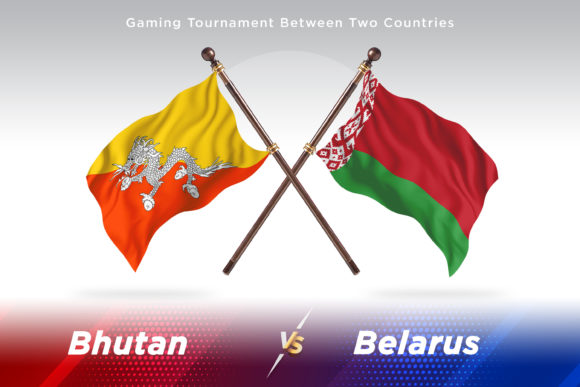
The flag of Bhutan is immediately recognizable for its bold, dramatic imagery. It features a diagonally divided field of saffron yellow and orange-red, with a large white dragon (known as the Druk) placed across the center. The dragon holds jewels in its claws, and its body is rendered in intricate detail. This is not a flag that fades into the background — it demands attention.
The dragon is central to Bhutanese identity. Known as the Thunder Dragon, it represents the Drukpa lineage of Tibetan Buddhism and the country’s own name, Druk Yul, or "Land of the Thunder Dragon." The yellow half of the flag symbolizes the civil authority and the king, while the red half represents the spiritual tradition of Buddhism. The jewels in the dragon’s claws stand for wealth and the protection of the nation.
For anyone interested in flag design as an art form, Bhutan’s flag is a masterclass in using a single powerful symbol to convey a complex cultural story. It breaks away from the common tricolor or stripe patterns found in many national flags and instead embraces a pictorial approach that feels both ancient and alive.
The Belarus Flag and Its Distinct Identity
Belarus adopted its current national flag in 2012, though its design dates back to 1995. It consists of a wide red horizontal stripe on top, a narrower green stripe below, and a decorative white-and-red ornamental pattern running along the hoist side. This pattern, which resembles traditional Belarusian embroidery, is known as the Belarusian national ornament.
Red in the Belarus flag represents the country’s heroic past and the victory over oppressors, while green stands for hope, spring, and the nation’s forests and fields. The ornamental stripe is not just decoration — it carries symbolic meaning. The pattern includes geometric shapes that reference agriculture, fertility, and the continuity of cultural traditions. The design is deeply rooted in Belarusian folk art and connects the flag to everyday life rather than to distant royal or religious authority.
Compared to Bhutan’s flag, Belarus presents a more geometric, pattern-based design. It avoids representational imagery like animals or objects and instead relies on color blocking and textile-inspired ornament. This makes it a great example of how national identity can be expressed through abstract design and cultural motifs rather than direct symbolism.
Comparing Visual Impact and Symbolism
When you place the Bhutan and Belarus flags side by side, the contrast is striking. Bhutan uses a full-bodied dragon that occupies the center of the flag, creating a sense of motion and power. Belarus uses a repeating geometric border that feels orderly, grounded, and rooted in craft traditions. One feels mythological and spiritual; the other feels cultural and historical.
Both flags, however, share a commitment to telling a story. Neither flag relies on generic symbols — everything has meaning. In Bhutan, the dragon’s pose, the colors, and the jewels all have specific cultural references. In Belarus, the ornamental pattern is not random — it is based on a specific traditional design that has been used for generations. For anyone studying flags from a semiotic perspective, both offer rich material for analysis.
Another interesting difference is color usage. Bhutan’s palette is warm and saturated — saffron, red, and white — which aligns with its Buddhist and Himalayan context. Belarus uses cooler tones — red, green, and white — that reflect its Eastern European landscape and history. These color choices are not arbitrary; they connect each flag to its geography, climate, and cultural preferences.
Why Someone Might Compare These Two Flags
At first glance, Bhutan and Belarus seem like an unlikely pair. One is a small Himalayan kingdom, the other a larger Eastern European nation. But comparing them is valuable for several reasons. For designers and creatives, studying how different cultures solve the same problem — representing a nation visually — can inspire new approaches to logo design, branding, and visual identity. Seeing how Bhutan uses a single detailed illustration while Belarus uses a repeating pattern can broaden your thinking about what visual strategies are available.
For educators and students, this comparison offers a concrete way to teach cultural geography, history, and political symbolism. Instead of memorizing flag colors in isolation, students can explore how each design reflects a country’s values, religion, and historical struggles. It makes the subject come alive.
For travelers and hobbyists, understanding these flags adds depth to travel experiences. If you visit Bhutan, knowing that the dragon represents the thunder and the king helps you appreciate the cultural landscape. If you visit Belarus, recognizing the ornamental pattern as a folk tradition connects you to local life. Flags become entry points into deeper understanding.
For entrepreneurs and small business owners involved in international trade or marketing, being able to distinguish and appreciate these national symbols shows cultural awareness. It helps in creating respectful and appropriate visual communications when entering new markets or collaborating with partners from these countries.
Practical Use Cases and Applications
So where does this knowledge actually matter in daily life or professional work? Here are a few realistic scenarios:
- Graphic design projects: If you are designing a multicultural campaign or a world map infographic, understanding the distinct visual logic of each flag helps you place them in a composition without clashing styles. Bhutan’s flag works best as a central icon, while Belarus’s flag works well in a repeated pattern or as part of a grid.
- Travel blogs or content creation: Writing about Bhutan or Belarus becomes more engaging when you can explain what their flags mean. A travel blogger might use the dragon motif to introduce Bhutan’s mythology, or the embroidery pattern to talk about Belarusian folk art.
- Educational materials: Teachers creating comparative lessons on national symbols can use these two flags as case studies. They offer clear contrasts in geography, religion, history, and art style, making them excellent for classroom discussion.
- Digital product design: App developers or website builders who offer flag icons or localization features need accurate and culturally informed representations. Knowing the details of each flag helps avoid design errors or misinterpretations.
- Brand identity inspiration: Entrepreneurs looking for unique visual approaches can learn from both flags. Bhutan shows the power of a single strong symbol. Belarus shows how a pattern can create texture and cultural depth. Both approaches can be adapted for logos, packaging, or brand materials.
Important Considerations Before Using or Studying These Flags
If you plan to use either flag in your work — whether in design, education, or content — there are a few things to keep in mind. First, always respect the official proportions and colors. Flags are protected symbols in most countries, and using them incorrectly can be seen as disrespectful or legally problematic. For Bhutan, the dragon must face the hoist side and the jewels must be properly oriented. For Belarus, the ornamental pattern has a specific width and placement — it is not a generic border you can resize freely.
Second, understand that flags can carry political weight. The flag of Belarus has been associated with the current government, and alternative historical flags exist that represent different political views. Similarly, Bhutan’s flag has a specific protocol for display and use. If you are creating content that touches on current events or political topics, be mindful of these nuances. It is always a good idea to verify your sources and use official government references when possible.
Third, consider the audience. If you are designing for an international audience, make sure your use of either flag is contextually appropriate. Using a flag as a decorative element in a commercial product may be fine in some cultures but seen as trivializing in others. When in doubt, err on the side of respect and accuracy.
Finally, if you are learning about flags as a hobby or for professional development, do not stop at the surface level. Both Bhutan and Belarus have rich flag histories. Bhutan’s flag has changed over time, with earlier versions featuring different dragon designs. Belarus has used several flags throughout its history, including the white-red-white flag associated with the pre-Soviet period and the opposition. Understanding these evolutions gives you a much fuller picture than simply memorizing the current design.
What These Flags Teach Us About National Identity
At its core, comparing Bhutan versus Belarus two flags is really about understanding how two nations choose to represent themselves to the world. Bhutan’s flag is deeply spiritual, rooted in Buddhism and monarchy, and unapologetically fantastical with its dragon. Belarus’s flag is grounded in folk tradition, natural landscapes, and a collective cultural memory expressed through pattern.
Both flags show that national identity is not a one-size-fits-all concept. Some nations lean into mythology and symbolism, while others lean into craft and history. Both approaches are valid, and both create flags that are memorable, meaningful, and visually effective. For anyone interested in design, culture, or global affairs, studying flags from different continents and contexts — like these two — opens up a world of insight that goes far beyond simple recognition.
Whether you are a creator looking for inspiration, a teacher building a lesson, or simply a curious person who wants to understand the world a little better, taking the time to explore what makes Bhutan’s and Belarus’s flags unique is a small but rewarding step. It reminds us that even the simplest visual elements — a dragon, a pattern, a stripe — can carry the weight of a nation’s entire story.