Bhutan vs Liberia: Two Flags Compared
Flags are more than national symbols. They condense history, identity, and values into a single visual statement. Comparing the flags of Bhutan and Liberia reveals two radically different design philosophies and cultural narratives. Whether you are a designer looking for inspiration, a teacher preparing a lesson on symbolism, or a marketer crafting an international campaign, understanding what makes each flag distinct can sharpen your visual literacy and broaden your cultural perspective.
The Stories Behind the Flags
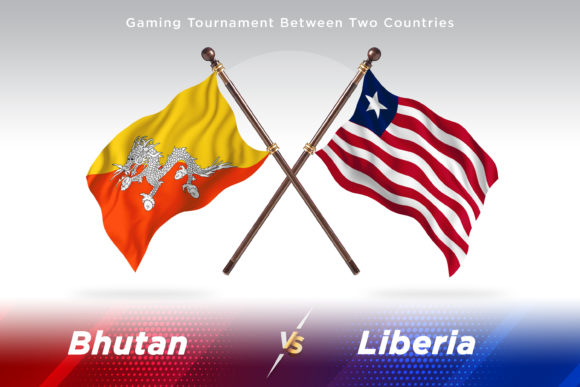
Bhutan’s flag is dominated by a dragon, the Druk, which symbolises the thunderbolt and represents the nation’s strength and the Buddhist faith. The yellow half stands for the king’s authority, while the orange half represents religious practice and the monastic tradition. Every element is rooted in centuries-old mythology and state Buddhism.
Liberia’s flag, by contrast, closely mirrors the flag of the United States: eleven horizontal stripes (six red, five white) and a blue square with one white star. The stripes stand for the signatories of the Liberian Declaration of Independence, the blue represents the mainland of Africa, and the single star symbolises liberty – a direct nod to the country’s founding by freed American slaves.
When you put Bhutan Versus Liberia Two Flags side by side, you are comparing a sacred dragon against a republican star, divergent colour palettes, and contrasting historical narratives. This comparison is not academic trivia; it has real-world value for professionals who work with symbols, culture, and design.
Design Differences and Their Practical Impact
The most obvious difference is complexity. Bhutan’s flag uses a stylised dragon outline, detailed shading, and a diagonal split. Liberia’s flag relies on simple stripes, a rectangle, and a single star. This contrast matters when you reproduce flags at small sizes, on digital screens, or in monochrome contexts. A small Bhutan flag icon may lose the dragon’s features, whereas a small Liberia flag retains recognisable stripes and star. Knowing this helps you choose the right flag for a logo, infographic, or presentation slide where readability and impact are critical.
Colour psychology also differs. Bhutan’s warm oranges and yellows evoke spirituality and royalty. Liberia’s red, white, and blue signal freedom, patriotism, and Western influence. If you are designing a multicultural campaign, these emotional cues can support or conflict with your message. A tourism ad featuring Bhutan’s flag naturally suggests tranquility and tradition; one featuring Liberia’s flag might project resilience and modernity. The Bhutan Versus Liberia Two Flags comparison becomes a practical tool for aligning visual tone with audience expectations.
For Marketers and Brand Strategists
Global brands often incorporate national flags in packaging, advertisements, or regional campaigns. Using the wrong visual style can create confusion. For instance, if you market a product as “handcrafted in Bhutan” but display a flag that looks too geometric or Western, the authenticity cue is lost. By studying Bhutan Versus Liberia Two Flags, you learn how graphical choices (organic vs. geometric shapes, warm vs. cool colours, asymmetry vs. symmetry) convey different levels of tradition, modernity, and trust. This knowledge helps you select visuals that reinforce your brand’s story without oversimplifying a nation’s identity.
For Educators and Creatives
Teachers designing lessons on world cultures or graphic design can use the flags as a case study in symbolism. Ask students: Why does Bhutan use a dragon instead of an eagle? Why does Liberia copy the U.S. flag pattern? These questions sharpen critical thinking about how nations assert identity through visual means. Creatives, such as logo designers or illustrators, can draw inspiration from the dragon’s flowing lines or the star’s clean geometry. The Bhutan Versus Liberia Two Flags comparison offers two contrasting solutions to the same problem: how to represent a country in a rectangle.
For Travel Writers and Bloggers
When writing about travel destinations, including flag symbolism adds depth. A paragraph explaining that Bhutan’s dragon holds jewels representing wealth and protection gives readers a richer understanding of the country’s culture. Similarly, noting that Liberia’s single star is a nod to its unique African-American heritage helps contextualise its history. This kind of content improves reader engagement and establishes your authority as a thoughtful writer. The Bhutan Versus Liberia Two Flags angle provides a clear structure for comparing destinations, making your post more memorable.
Practical Use Cases in Everyday Work
- Presentation design: If you are comparing countries in a business meeting, using both flags correctly shows attention to detail. Place Bhutan’s flag on a slide about Buddhist tourism and Liberia’s on a slide about emerging markets. The visual contrast reinforces your narrative.
- Infographics and data visualisation: When creating charts for global data, flags act as scannable markers. However, small reproductions of Bhutan’s dragon may become indistinct. Consider simplifying the dragon to a silhouette or using the flag colours as a background shade instead of the full design. Liberia’s flag scales down well. Recognising this difference helps you avoid a cluttered or unprofessional graphic.
- Game design or virtual worlds: Fictional nations often borrow elements from real flags. Combining Bhutan’s spiritual dragon with Liberia’s simple stripe layout could produce a unique emblem that reads well at various resolutions. Studying Bhutan Versus Liberia Two Flags gives you a concrete reference for mixing organic and geometric motifs.
Who Benefits Most from This Comparison?
Professionals in cross-cultural communication will find the most value. International relations officers, diplomats, and NGO workers need to understand the subtle meanings behind national symbols to avoid unintended offense. A flag mishandled can signal disrespect. Knowing that Bhutan’s flag is sacred and cannot be altered casually, whereas Liberia’s flag is more utilitarian in design, helps you approach each symbol with appropriate care.
Graphic designers and art directors who work with world flags in editorial layouts or brand campaigns will also benefit. The two flags represent opposite ends of the visual spectrum: maximalist narrative (Bhutan) versus minimalist representation (Liberia). Studying them side by side clarifies how much detail a symbol needs to communicate effectively, a lesson that applies beyond flags to logos, icons, and badges.
Hobbyists interested in vexillology (the study of flags) will naturally enjoy the deep dive into historical context. But even casual learners can use the comparison to become more visually literate. Next time you see a flag on a news broadcast or at an event, you might notice whether it leans towards the Bhutan or Liberia style and infer something about the values behind it.
Limitations and Considerations
No single comparison captures the full meaning of any flag. Bhutan’s flag also includes specific references to Dzongkha language and Buddhist cosmology that a simplified description cannot cover. Liberia’s flag, while visually simple, carries complex political history including its role as a symbol for the African diaspora. If you are writing a report or creating educational material, always include a note that flags are living symbols with multiple layers. The Bhutan Versus Liberia Two Flags exercise is a starting point for deeper research, not the final word.
Also, consider the audience’s familiarity. For a global audience, both flags may be equally unfamiliar. Use the comparison to build bridge knowledge. For readers from South Asia or West Africa, you may need to provide additional context about the other flag. Tailor the depth of your explanation to the reader’s likely background.
Examples That Bring the Comparison to Life
- Social media post: A travel influencer posts a photo of a Bhutanese prayer flag alongside the national flag. In the caption, they explain the dragon’s meaning and invite followers to compare it with Liberia’s star. This prompts engagement and shares.
- Corporate brochure: A trade delegation planning a mission to both countries uses a two-page spread with the flags and brief symbolism notes. The visual comparison helps delegates quickly mentally map the cultural priorities of each destination.
- Classroom activity: A geography teacher shows both flags and asks students to list three visual differences and three historical reasons for those differences. The exercise improves observation and research skills in 15 minutes.
In each case, the Bhutan Versus Liberia Two Flags framework provides a clear, structured way to present information that is both informative and visually engaging.
Final Thoughts on Using This Comparison
Comparing flags is not about declaring one superior. It is about seeing how different cultures solve the same symbolic challenge. Bhutan Versus Liberia Two Flags shows how a dragon and a star can both represent freedom, yet through entirely different aesthetics. This insight can improve your communication, strengthen your designs, and sharpen your cultural awareness. Whether you are building a brand, teaching a class, or simply satisfying your curiosity, take a minute to look closely at both flags. You may see your own symbols—and the world’s—with fresh eyes.