Bosnia Versus North Macedonia: The Stories Behind Two Balkan Flags
Flags are far more than pieces of cloth fluttering in the wind. They are concentrated symbols of national identity, history, struggle, and aspiration. For the casual observer, the flags of Bosnia and Herzegovina (often simply called Bosnia) and North Macedonia might seem like two unrelated designs from a distant corner of Europe. But when you place them side by side, a deeper story emerges—one of overlapping histories, distinct national narratives, and the complex task of forging unity in regions marked by diversity.
Understanding the flags of Bosnia and North Macedonia is not just an exercise in geography. It is a window into how two nations have chosen to represent themselves to the world, what they prioritize in their national story, and how they navigate the tensions between tradition, modernity, and ethnic plurality.
The Flag of Bosnia and Herzegovina: A Delicate Balance of Unity
The flag of Bosnia and Herzegovina was officially adopted on February 4, 1998, following the Dayton Peace Agreement that ended the Bosnian War. Its design is deliberately neutral, avoiding any direct reference to the three main ethnic groups (Bosniaks, Serbs, and Croats) that had been locked in conflict.
Design and Description
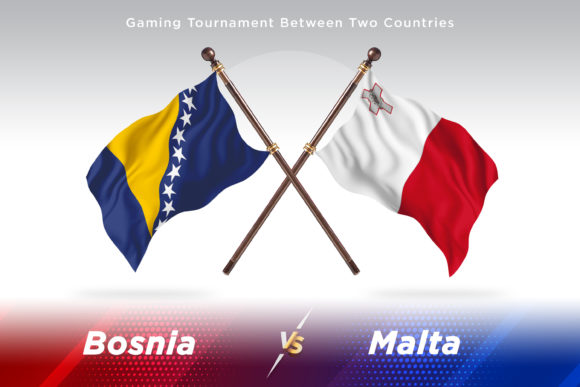
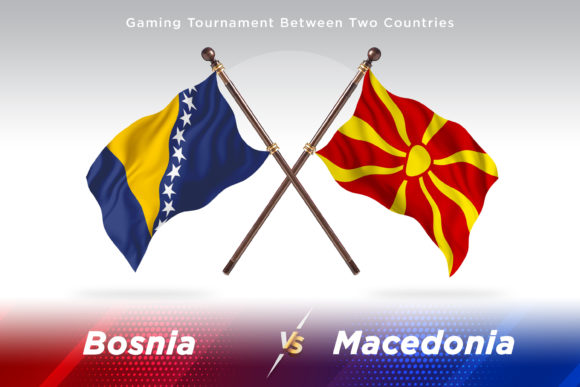
The flag features a wide blue vertical band on the right side, a gold triangle on the left, and a line of seven white stars along the hypotenuse of the triangle. The stars are five-pointed and two half-stars appear at the top and bottom edges, suggesting continuity.
- Blue – Represents peace, neutrality, and the European Union, signaling the country’s European aspirations.
- Gold triangle – Symbolizes the three constituent peoples (Bosniaks, Serbs, and Croats) and the triangular shape of the country itself.
- White stars – Often interpreted as representing the eternal and continuous nature of the nation, though their exact meaning is intentionally open-ended to avoid ethnic favoritism.
Historical Background
Before this flag, Bosnia had used a variety of symbols—from medieval royal banners to a flag featuring the fleur-de-lis during the 1992–1995 war. The fleur-de-lis flag was strongly associated with the Bosniak (Muslim) identity, which made it divisive in the post-war context. The current flag was chosen by the Office of the High Representative to be a symbol that all groups could accept. This makes it one of the most carefully negotiated flags in modern history.
Practical Relevance Today
You will see the Bosnian flag displayed at government buildings, international sporting events, and on official documents. For travelers, it is a sign of a country working to present a unified face despite its complex internal structure. Businesses operating in Bosnia often use the flag in branding to emphasize national pride and legitimacy.
The Flag of North Macedonia: Sun, History, and Sovereignty
The flag of North Macedonia has undergone a dramatic transformation in recent decades. It tells a story of identity reclamation, regional disputes, and eventual compromise.
Design and Description
The current flag features a yellow or gold sun with eight rays against a red field. The sun appears in the center, and its rays extend outward, creating a bold, dynamic image.
- Red field – Represents the blood of freedom fighters and the nation’s revolutionary spirit. Red also connects to the historical legacy of the region.
- Yellow/Gold sun with eight rays – Symbolizes a “new sun of liberty” and the dawn of a new era for the Macedonian nation. The eight rays are said to represent the eight regions of the country, though this interpretation is not official.
Historical Background
North Macedonia’s flag history is deeply intertwined with its naming dispute with Greece. From 1992 to 1995, the country used a flag featuring the Vergina Sun—a sixteen-pointed star associated with ancient Macedon and Alexander the Great. Greece objected fiercely, arguing that the symbol was exclusively Hellenic. Under international pressure and as part of the 1995 Interim Accord, North Macedonia revised its flag to the current eight-rayed sun.
The red and gold color scheme remains, and the sun motif is retained, but the new design is distinct enough to resolve the diplomatic conflict. The flag was officially adopted on October 5, 1995.
Practical Relevance Today
Today, the flag of North Macedonia is a source of national pride. You will see it at the border crossings, on public buildings in Skopje, and at international events like the Olympics. For businesses, the flag is a symbol of a young nation (full independence came in 1991) that is eager to engage with the world. It also appears frequently in tourism campaigns that highlight the country’s ancient heritage and natural beauty.
Comparing the Two Flags: Bosnia Versus Macedonia
When we place the Bosnia flag next to the Macedonia flag, several contrasts and a few surprising parallels emerge.
Color Palette and Emotional Tone
- Bosnia uses blue, gold, and white—cool, neutral, and diplomatic colors that suggest calm and unity.
- North Macedonia uses red and gold—bold, warm, and revolutionary colors that evoke passion, struggle, and celebration.
These palettes reflect very different national journeys. Bosnia’s flag was designed to heal after conflict; North Macedonia’s flag was designed to declare a new identity.
Symbolism: Geometric Abstraction vs. Natural Imagery
Bosnia’s flag is abstract: a triangle and stars that require explanation. North Macedonia’s flag is immediately recognizable as a sun, a universal symbol of life and new beginnings. The abstract nature of Bosnia’s flag makes it less emotionally charged but also harder for citizens to connect with. The sun on North Macedonia’s flag is direct and proud.
Political Compromise
Both flags are products of political compromise. Bosnia’s flag was imposed by an international body to avoid favoring any ethnic group. North Macedonia’s flag was changed due to a dispute with a neighboring country. In both cases, the flags exist as negotiated symbols—not necessarily the first choice of the people, but functional and accepted.
Common Misunderstandings and Assumptions
Many people mistakenly assume that Balkan flags all follow similar patterns (for example, using Pan-Slavic colors). While many Slavic nations use red, white, and blue, these two flags intentionally break that mold. Bosnia’s blue is closer to EU blue than to Pan-Slavic blue. North Macedonia’s red and gold connect more to local history than to any broader Slavic tradition.
Another misunderstanding is that the eight-rayed sun on the North Macedonian flag is a direct replacement for the Vergina Sun. While it is a compromise, it is also an authentic cultural symbol that has appeared in folk art and embroidery for centuries. It is not a “lesser” symbol—it is a distinctly Macedonian one.
Broader Context: What Flags Tell Us About National Identity
Both Bosnia and North Macedonia are post-Yugoslav states, meaning they emerged from the breakup of Yugoslavia in the 1990s. Their flags offer a fascinating case study in how nations build symbols from scratch or reinvent older ones.
In Bosnia’s case, the flag reflects a country that is still negotiating its internal diversity. It is not a flag that tells a single story, but one that attempts to contain multiple stories without letting any dominate. This is both its strength and its weakness—it is inclusive but can feel impersonal.
In North Macedonia’s case, the flag tells a story of a nation that has existed for centuries (culturally) but only became independent in the 1990s. The sun is a confident symbol that looks forward, but the history of its change also reminds us that identity is never static.
Travel and Tourism
If you are visiting the Balkans, knowing these flags can enrich your trip. When you see the Bosnian flag at a checkpoint or museum, you can appreciate the delicate peace it represents. When you see the North Macedonian flag in Ohrid or Skopje, you can understand the pride behind the sun.
Business and Diplomacy
For professionals working in international development, trade, or diplomacy in the region, these flags are important visual shorthand. Using the correct flag in a presentation or document signals that you understand the history and sensitivities of the country. Using the wrong flag—or the old flag—can cause offense.
Education and Civic Learning
Teachers and students studying the Balkans will find these flags useful entry points into larger discussions about nationalism, conflict resolution, and the role of symbols in society. Comparing the two flags is a practical lesson in how design reflects politics.
Conclusion: Two Flags, One Region, Endless Meaning
The comparison of the flags of Bosnia and North Macedonia is not about choosing which design is better. It is about understanding that every flag carries a weight of history, compromise, and aspiration. Bosnia’s flag asks us to think about unity in diversity. North Macedonia’s flag asks us to think about identity and resilience.
For the general reader, the lesson is one of context: before you judge a flag as simple or complex, ask what story it is trying to tell. The blue and gold of Bosnia and the red and gold of North Macedonia are not just colors—they are statements. And in the Balkan context, those statements matter deeply.
Whether you encounter these flags at a sporting event, in a news article, or on a trip through the region, you now have the background to see beyond the cloth. You see the negotiations, the compromises, the ancient symbols, and the modern hopes. That is the power of understanding flags—not as trivia, but as windows into the soul of a nation.